
The Great Layout Debate
If you've spent any time browsing renovation inspiration online, you've probably noticed two competing trends. On one side, there are stunning open-concept kitchens that flow seamlessly into living and dining areas. On the other, beautifully defined rooms with clear boundaries and distinct character. So which one is actually right for your home?
It's a question we hear constantly from homeowners across Fort Lauderdale, and the answer isn't as simple as picking whatever looks best on a screen. Your ideal layout depends on how you actually live, the structure of your existing home, and what makes sense for resale value in South Florida. Let's break it all down.
What Open Concept Actually Means
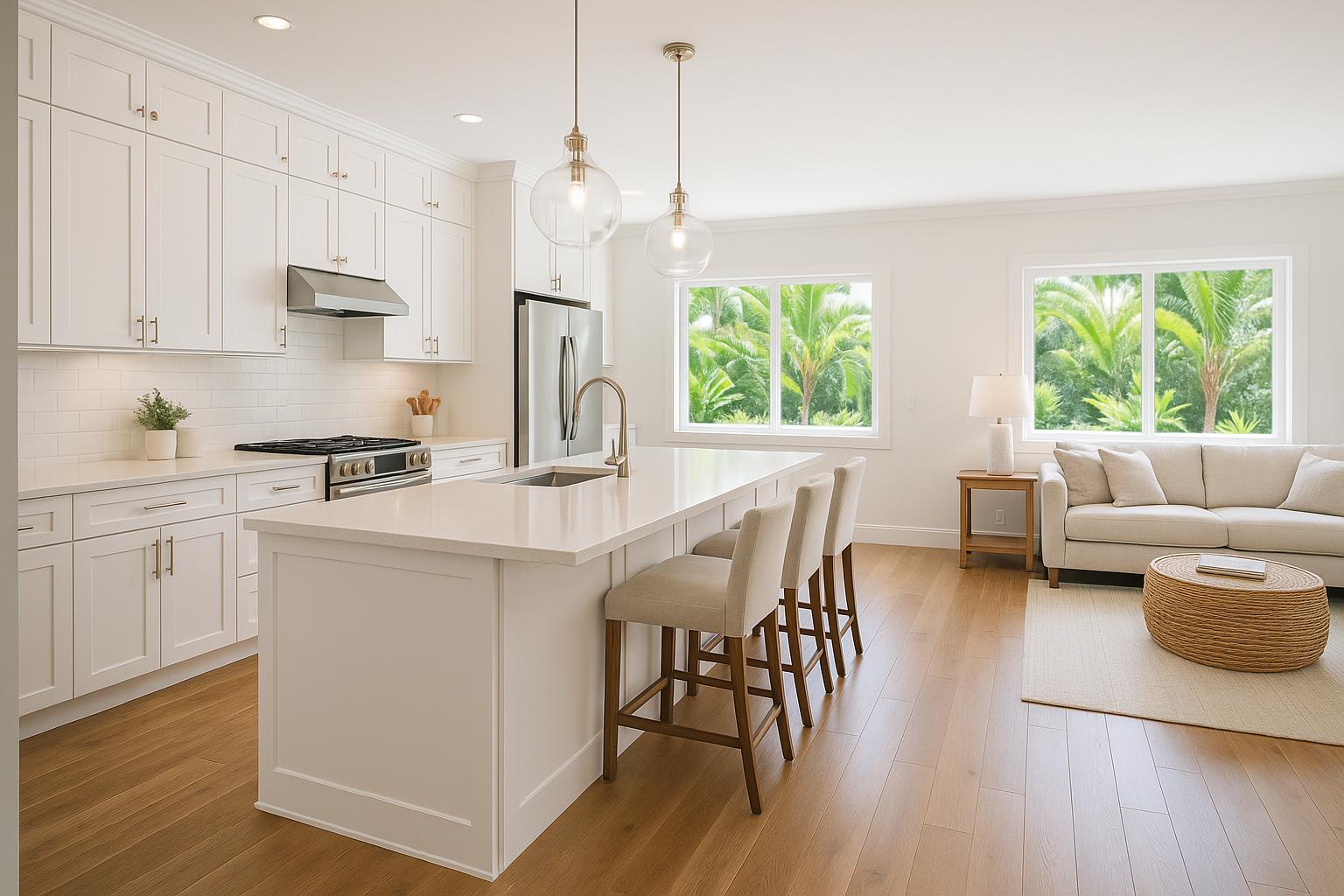
An open floor plan removes walls between common areas — typically the kitchen, dining room, and living room — to create one large, connected space. The appeal is obvious: more natural light, better sightlines, and a sense of spaciousness that can make even a modest home feel larger.
For Fort Lauderdale homeowners who love to entertain, an open layout lets you cook while chatting with guests in the living room. Parents can keep an eye on kids doing homework at the dining table while prepping dinner. And in our market, where outdoor living is a big draw, open concepts can create a seamless transition from interior spaces to a patio or lanai.
Pros of Going Open Concept
- More natural light: Without walls blocking windows, sunlight travels deeper into the home — a real advantage during our long, bright Fort Lauderdale days.
- Better flow for entertaining: Guests aren't confined to one room, and the host isn't isolated in the kitchen.
- Perceived square footage: Even without adding a single square foot, removing a wall can make a home feel significantly bigger.
- Modern appeal: Open floor plans remain popular with buyers, which can help at resale.
Cons to Consider
- Less privacy and quiet: Cooking noise, TV sounds, and conversations all share the same space.
- Fewer walls for storage and display: You lose wall space for cabinets, shelving, and artwork.
- Structural complexity: Some walls are load-bearing, which means removing them requires engineering solutions — and a bigger budget.
- Cooking smells travel: That delicious fish dinner? Your living room will know about it.
The Case for Defined Rooms
Defined rooms — sometimes called a traditional or closed floor plan — have been making a quiet comeback. After years of open-concept dominance, many homeowners are realizing that walls serve a purpose beyond structure. They provide sound separation, visual boundaries, and the ability to use rooms in different ways without everything blending together.
This is especially relevant now that more people work from home. If you need a quiet home office, a separate dining room that doubles as a workspace, or a living room where someone can watch TV without disrupting the rest of the household, defined rooms start to look very appealing.
Pros of Keeping Rooms Separate
- Sound control: Walls absorb and block noise, making it easier for different family members to do different things simultaneously.
- Dedicated functionality: A formal dining room stays a dining room. A den stays a den. There's less visual clutter.
- Energy efficiency: Smaller, enclosed rooms are easier to cool — and in Fort Lauderdale, where air conditioning runs most of the year, that can translate to real savings on your energy bill.
- Design variety: Each room can have its own personality, color palette, or style without needing to coordinate with every adjacent space.
Cons to Consider
- Can feel cramped: Especially in smaller homes, too many walls can make the space feel tight and dark.
- Less flexibility for gatherings: Hosting a dinner party in a small, enclosed dining room feels very different from hosting in a wide-open great room.
- Potentially dated feel: Depending on the home's era and layout, a fully closed floor plan can read as outdated to some buyers.
The Middle Ground: Partial Open Concept
Here's what we recommend most often to our clients: you don't have to choose one extreme or the other. A partial open concept gives you the best of both worlds. For example, you might open the kitchen into the living area while keeping a separate home office or guest bedroom with a door that closes. Or you might use a half wall, a large archway, or a kitchen island to create visual separation without fully enclosing the space.
This hybrid approach is especially popular in the ranch-style and mid-century homes found throughout Davie, Plantation, and other neighborhoods in the greater Fort Lauderdale area. These homes often have compact, segmented layouts that benefit enormously from opening up one or two key walls while leaving the rest of the floor plan intact.
What to Think About Before You Decide
Before you pick up a sledgehammer — or decide to leave every wall standing — ask yourself these questions:
- How does your family actually use the home? If everyone gravitates to the kitchen and living room anyway, opening those spaces makes sense. If family members need separate zones for work, school, or hobbies, defined rooms may serve you better.
- Are any walls load-bearing? A licensed contractor can assess this for you. Removing a load-bearing wall is absolutely possible, but it requires a beam and proper engineering, which adds to the project cost.
- What's your HVAC situation? Opening up large areas can change how your air conditioning system performs. In Fort Lauderdale's heat and humidity, this is worth discussing with your contractor early in the planning process.
- What does the local market favor? If you plan to sell in the next five to ten years, it's worth considering what buyers in your neighborhood expect. In most of South Florida, some degree of openness is a selling point — but a home that feels like one giant room with no separation can also turn buyers off.
- What's your budget? Removing a non-load-bearing wall is one of the most affordable renovations you can do. Removing a load-bearing wall, rerouting electrical and plumbing, and refinishing floors where the wall used to be costs considerably more.
How Harbor ADU Builders Can Help
Whether you want to open up your entire first floor or simply widen a doorway between the kitchen and dining room, the key is working with a contractor who understands both the structural realities and the design possibilities. At Harbor ADU Builders, we help Fort Lauderdale homeowners make layout decisions that match their lifestyle, their budget, and the character of their home.
We'll walk you through what's structurally feasible, handle any necessary permits, and make sure the finished result feels intentional — not like someone just knocked out a wall and called it a day. If you're considering a layout change as part of a larger kitchen remodel, bathroom renovation, or interior update, we'd love to talk through your options.
Reach out to us for a free consultation and let's figure out the right layout for the way you actually live.